
Babesia is a microscopic parasite that infects red blood cells. There are over 100 known species of Babesia, but we genaerally test for only two types in the USA. One can be asymtomatic imediately after contracting Babesia becasue this maralia like parastic form takes time to replicate. One may not associate an onset of symtoms weeks or months after a tick bite. A very small amount of people will react right away to the introduction of Babesia.
Dr. Rawls has a very informative article on Babesia here.
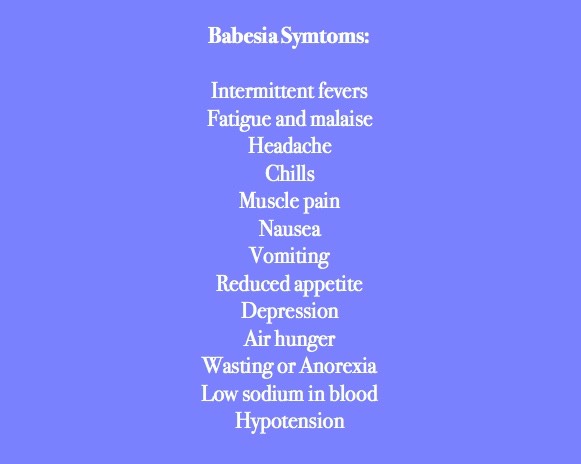
Some patients will develop enlarged livers or spleens or experience organ failure. Babesia can cause a specific type of anemia, called hemolytic anemia, since the parasites infect and destroy red blood cells. Patients may present with low red blood cells. Small red or purple spots due to bleeding into the skin and bruises may occur. Jaundice has been reported by those with babesia most likely due to the lysis of red blood cells. Bruise like rashes have been reported also
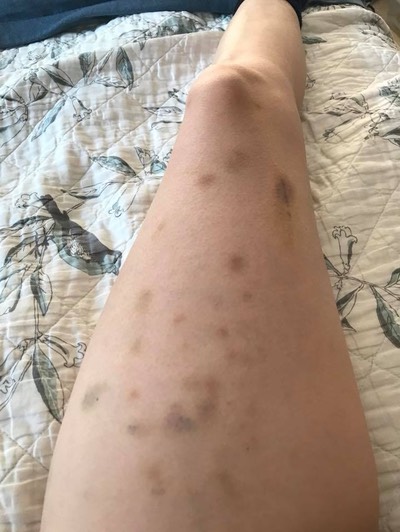
Only a small percentage of patients develop a rash. A petechiae rash (small pinpoint <3mm purple, red or brown spots due to bleeding under the skin) may occur.
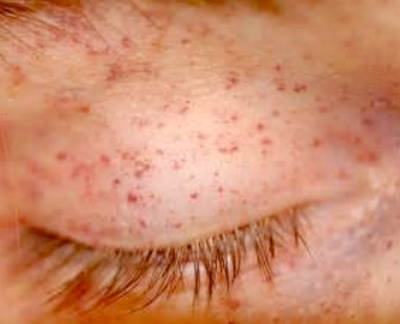
Examples of petechiae rash. Photo credit from www.emedicalupdates.com

Petechiae on the face. Image Source: consultant360.com
Babesia is traditianlly treated with anti-malaria drugs like Mepron, Quinine, Clindamycin, or Azithromycin
Some herbs that used to treat babesia are:
Cryptolepis sanguinoleta - Cryptolepis
Artemisia annua - Sweet Annie
Sida acuta or cordifolia- Sida
Alchornea Cordifolia -Alchornea
Silybum marianum- Milk Thistle
Extract of turmeric called curcumin
Withania somnifera -Ashwagandha
Panax ginseng - Chinese ginseng
Glycyrrhiza glabra - Licorice
Eupatorium perfoliatum - Boneset
Chinese herbs:
Radix Dichroae, Chinese name: Chang San
Fructus Bruceae, Chinese name: Ya Dan Zi
Salvia Miltioriihiza, Chinese name: Dan Shen
Schisandra chinensis, Chinese name: Wǔ Wèi Zi